Browsing: Rolex 1:1 Replica Watches

Is Rolex Quietly Retiring the GMT-Master II Pepsi?

Few Rolex rumors spread faster than whispers about the GMT-Master II “Pepsi.” It happens almost every year. Someone claims production is ending, Reddit lights up for a week, gray-market prices twitch upward, and then everything settles back down again.

Over the last couple of months, collectors started noticing something odd: several replica Rolex authorized dealers quietly removed blue-and-red GMT-Master II models from their websites entirely. Not just the stainless steel ref. 126710BLRO, either. White-gold Pepsi variants appeared to vanish too.

That immediately got people talking.

Anyone who’s spent time chasing a steel Rolex sports model already knows how strange the buying process has become. Walking into a boutique and casually buying a Daytona or Pepsi GMT off the shelf? For most people, that simply doesn’t happen anymore. There’s an unspoken understanding that purchase history matters — sometimes a lot.

Still, dealer websites removing every Pepsi configuration at once is unusual enough to raise eyebrows.

Watch-focused outlets like Time + Tide and Wrist Enthusiast both picked up on the story recently after collectors began sharing screenshots and conversations with authorized dealers online. According to several anecdotal reports, some ADs have apparently stopped taking new expressions of interest for the steel Pepsi altogether.

That doesn’t necessarily confirm a discontinuation. Rolex almost never comments publicly on this sort of thing. In fact, every Pepsi GMT reference still appears on the official Rolex GMT-Master II catalog as of now.

And honestly, that’s part of what makes the situation so confusing.

The Rumor Isn’t New — But the Timing Feels Different

Collectors have been predicting the death of the modern Pepsi ever since Rolex reintroduced it in stainless steel back in 2018.

One popular theory claimed the red-and-blue Cerachrom bezel was difficult to manufacture consistently. Maybe there’s some truth there. Ceramic production at Rolex’s scale is incredibly demanding. Then again, plenty of enthusiasts suspect the story became popular simply because some collectors never loved the slightly violet-blue tone Rolex chose for the bezel in certain lighting.

Either way, Rolex has never acknowledged production issues publicly.

What makes this year’s speculation more convincing is the consistency of the dealer-site removals. Models like the “Batman,” “Sprite,” and “Root Beer” GMTs remain widely displayed, while Pepsi references seem to have disappeared almost entirely from some AD catalogs.

Here’s a quick breakdown of what collectors are tracking right now:

Reference Nickname Material Dealer Site Visibility
126710BLRO Pepsi Stainless Steel Removed from some AD sites
126719BLRO Pepsi White Gold Removed from some AD sites
126710BLNR Batman Stainless Steel Still visible
126720VTNR Sprite Stainless Steel Still visible
126711CHNR Root Beer Two-tone Still visible

Even so, there’s still reason for skepticism.

Pricing data from Chrono24 hasn’t exploded the way you’d expect if insiders truly believed the Pepsi was gone for good. Values have risen modestly, but nothing close to the frenzy surrounding genuinely discontinued Rolex references in the past.

And Rolex collectors — maybe more than any other enthusiast group — love a rumor.

Rolex Has Done This Before

As strange as it sounds, discontinuing an enormously popular watch wouldn’t actually be unprecedented.

Back in 2021, Patek Philippe shocked the industry by ending production of the stainless steel Nautilus 5711, arguably the single most hyped luxury sports watch in the world at the time. Demand had grown so intense that the watch almost overshadowed the rest of the brand.

Rolex may not want a single GMT reference dominating the conversation forever either.

Then again, fake Rolex tends to move cautiously. The company rarely makes abrupt changes unless it has a long-term replacement strategy already planned out. Some collectors think a redesigned Pepsi could appear instead of a full cancellation. Others are hoping — maybe unrealistically — for the return of the black-and-red “Coke” GMT.

That possibility alone is enough to keep forums busy for months.

Watches and Wonders Could Reveal Everything

If Rolex is planning a major GMT shake-up, the most likely moment for confirmation would be during Watches and Wonders Geneva.

That’s traditionally when Rolex refreshes its catalog and quietly retires outgoing references. No dramatic farewell announcements. Sometimes a watch is simply… gone.

And if the Pepsi does disappear, it probably won’t stay absent forever. Rolex knows exactly how important the model is historically.

The original GMT-Master became tied to international travel during the jet age, and the blue-and-red bezel eventually turned into one of the most recognizable color combinations in modern watchmaking. Even people who know almost nothing about watches can usually identify a “Pepsi” Rolex instantly.

That kind of recognition is hard to walk away from permanently.


Meanwhile, Another Wild Rolex Story Appeared

As if the Pepsi rumors weren’t enough, another GMT-Master II recently surfaced that pulled attention in a completely different direction.

And honestly, this one feels almost surreal.

Wind Vintage recently listed an extraordinarily rare Rolex GMT-Master II ref. 116758SANR — a yellow-gold, gem-set off-catalog piece originally produced around 2006.

Calling it flashy barely covers it.

The bezel features 36 baguette diamonds and 12 black sapphires, including a triangular sapphire marker used to track a third time zone. Diamonds continue across the lugs and crown guards as well. It’s the sort of Rolex that feels less like a tool watch and more like rolling stage lighting strapped to the wrist.

And yet, that’s exactly why it matters culturally.

Because this isn’t just any 116758SANR.

It’s the same watch worn by Drake on the cover of the album Take Care — one of the defining rap albums of the 2010s. The record spent hundreds of weeks on the Billboard 200 and won Best Rap Album at the 55th Grammy Awards.

Oddly enough, the watch apparently wasn’t even part of Drake’s personal collection long term. According to the listing, it originally belonged to someone connected to his early circle.

There’s also an engraved OVO owl on the caseback, which pushes the provenance into another category entirely. At that point, you’re not just buying a rare replica Rolex. You’re buying a strange little piece of music history too.

Wind Vintage is reportedly asking around $500,000 for the full package, which also includes memorabilia tied to the Take Care era.

Will it actually sell for that amount? Hard to say. Provenance-driven collecting can be unpredictable. Sometimes buyers pay astonishing premiums for cultural relevance. Other times the market shrugs.

Still, it’s difficult not to admire how bizarre and specific modern watch collecting has become.

A discontinued Pepsi rumor on one side of the hobby. A half-million-dollar Drake GMT on the other.

{ Comments are closed }

The Evolution and Collectibility of Green Rolex Submariners and the Day-Date

Rolex has long been a benchmark of innovation, precision, and luxury in the watchmaking world. Two collections in particular – the green Submariner and the Day-Date – exemplify the brand’s evolution and enduring appeal. Each collection reflects a combination of design innovation, technical refinement, and cultural significance, making them both highly sought-after by collectors.  

Origins and Milestones
In 2003, Rolex introduced the first green Submariner, the ref. 16610LV, nicknamed the “Kermit,” to mark the collection’s 50th anniversary. This stainless steel diver featured a black dial and a green aluminum bezel – a first for a steel Submariner. The Kermit remained in production until 2010, when the next generation of replica Submariners, including the ref. 116610LV (“Hulk”), entered the market.
The current green Submariner, the ref. 126610LV, known widely as the “Starbucks” or sometimes the “Cermit” (a blend of Kermit and ceramic), was launched in 2020. Though sharing the iconic black dial and green bezel aesthetic, it embodies modern advancements in movement, materials, and ergonomics.

Bezel Material: Aluminum vs. Ceramic
The Kermit’s green aluminum bezel was groundbreaking at launch, offering a subtle, evolving patina over time. Each aluminum insert varies slightly depending on production year, giving collectors a unique, character-rich watch.
The Starbucks, in contrast, features Rolex’s Cerachrom ceramic bezel, which is virtually scratch-resistant and fade-proof. Its deep, olive-green hue is consistent and vibrant, maintaining color integrity under sunlight and saltwater exposure.  

Case Size and Design
The Kermit retained the classic 40mm case, while the Starbucks upgraded to a 41mm case with refined lugs, resulting in a more balanced and elegant wrist presence. The change reflects Rolex’s effort to modernize while preserving the Submariner’s distinctive silhouette.

Bracelet and Clasp
The Starbucks incorporates an updated Oyster bracelet with Glidelock, enabling fine adjustments without tools. The Kermit used an older folding clasp without such versatility, highlighting the practical improvements of the newer generation.

The Hulk’s Role
Between these models sits the Hulk (ref. 116610LV), produced from 2010 to 2020. Known for its green sunburst dial and monochromatic Cerachrom bezel, it serves as a transitional model bridging the Kermit and Starbucks in both style and movement.

Collectibility
The Kermit remains highly coveted, particularly rare variants like the “Flat 4.” Its limited anniversary production and unique aluminum bezel aging patterns contribute to strong appreciation in value. Meanwhile, the Starbucks enjoys strong secondary market demand due to its contemporary 41mm case, advanced Caliber 3235 movement, and limited dealer availability.

History and Significance
Introduced in 1956, the Rolex Day-Date quickly earned the moniker “President’s Watch” due to its association with world leaders, most famously U.S. President Lyndon B. Johnson. It was the first wristwatch to display both the day of the week and the date, coupled with a waterproof Oyster case and automatic movement.
The collection has consistently been produced in precious metals – gold and platinum – and remains a symbol of success and prestige.  Rolex Submariners 42mm

Design Evolution
Case Size: Originally 36mm, expanded to 41mm with the fake Day-Date II in 2008, then refined to 40mm in the Day-Date 40 series.
Bracelets: The iconic President bracelet features semi-circular three-piece links with a concealed Crownclasp. Some modern models offer leather straps or flat-link Oyster bracelets.
Dials and Bezels: Day-Date watches include a wide variety of dials – traditional stick markers, Roman numerals, diamond indexes, and even exotic materials such as meteorite or semi-precious stones. Bezels may be fluted, smooth, textured, or diamond-set.

Movement Evolution
Early references (6510, 6511) housed the cal. 1055, progressing through the cal. 1555, 1556, and 3055 with key innovations such as hacking seconds and the Single Quickset.
Later movements, like the cal. 3155, introduced the Double Quickset, simplifying calendar adjustments.

The current cal. 3255, featured in Day-Date 36 and 40, delivers 70-hour power reserve, anti-magnetic and anti-shock properties, and 14 patents, exemplifying Rolex’s continuous technical refinement.

Investment and Collectibility
Day-Date watches retain value exceptionally well due to their exclusive use of precious metals, historical significance, and technical innovation. Vintage models like the 1803, 18038, and 18078 offer entry points for collectors, while modern references in gold or platinum represent long-term investment potential.
Purchasing pre-owned models provides advantages: immediate availability, potential savings, and reduced initial depreciation. The timeless design, precision engineering, and scarcity of certain references make the Day-Date a coveted piece among enthusiasts and investors alike.

Both the green Submariner and Day-Date collections showcase Rolex’s mastery of design, technical innovation, and cultural resonance. The green Submariner illustrates the evolution of a professional sports watch across generations, while the Day-Date embodies status, prestige, and horological refinement.
Whether appreciating subtle variations in a vintage Kermit, the contemporary appeal of a Starbucks, or the enduring elegance of a Day-Date, collectors and enthusiasts alike recognize the significance of these watches in Rolex’s storied legacy.

{ Comments are closed }

Why Rolex Often Refuses to Service Vintage Watches

When my grandmother passed away last year, my mother inherited her most elegant possession – a delicate ladies’ Rolex with a scalloped gold bracelet and a circle of tiny diamonds framing its face. It wasn’t just a watch; it was a symbol of grace, the kind my grandmother wore effortlessly through decades of family gatherings and milestones. Even today, the watch’s design feels timeless, perfectly suited for any modern wrist.

But the watch no longer ticked. Hoping to restore it, my mother took it to a certified Rolex retailer. To our surprise, they politely declined the repair, explaining that Rolex no longer services vintage models like hers. A second jeweler hesitated as well, unsure whether they could handle the restoration. One even suggested she simply keep it as a bracelet.

It was a disappointing revelation. Rolex replica is a giant in the luxury watch world, producing over a million watches a year and capturing nearly one-third of the global market. With sales reportedly exceeding $10 billion in 2023, it’s no wonder Rolex is seen not only as a brand but as a legacy – the kind people proudly pass from one generation to the next. Given that reputation, it felt strange that the company wouldn’t service one of its own older watches.

The Limits of Timelessness
When I reached out to Rolex, a spokesperson pointed to the company’s policy: parts and labor are guaranteed for at least 35 years after a model is discontinued. Beyond that, service may not be possible. In other words, if your Rolex was retired from the catalog before 1990, you could be out of luck.

Watchmaker Greg Petronzi, a specialist in restoring vintage Rolexes, told me this policy is far from unusual. “If you bring a vintage piece to a Rolex service center, it’s not uncommon to be turned away,” he said. “It’s really a shame because these watches are masterpieces – collectible, important, and deeply personal.”

Rolex’s reasoning, experts say, is partly practical. Over the past decade, the brand has phased out production of many parts used in watches from the 1970s and earlier. Without access to original components, official Rolex centers often can’t meet their strict quality standards, which emphasize restoring full reliability and performance.

Michael Woods, a former Rolex head watchmaker, explained that these standards are uncompromising. “If a repair can’t meet Rolex’s guarantee of precision and durability, they simply won’t take the job,” he said.

Independent Watchmakers to the Rescue
For those with vintage pieces, all hope isn’t lost. Independent experts like Petronzi and Woods still specialize in breathing new life into discontinued Rolexes. But their work requires dedication – and money. Original parts must often be sourced from the secondary market or painstakingly reproduced. Specialized tools can cost thousands; Petronzi once paid $15,000 for a rare instrument just to complete one repair.

Still, collectors continue to seek out these craftsmen. “Some brands, like Patek Philippe, will service any watch they’ve ever made, even if it means recreating a part from scratch,” Petronzi said. “Rolex doesn’t take that approach – they’re focused on looking forward, not back.”

The Risk of Over-Restoration
When restoring a vintage watch, one must also tread carefully. As expert dealer Eric Wind explained, some repairs may make a replica watch function better but erase its historical or collector value. “I’ve seen a million-dollar vintage watch lose 97% of its value because someone replaced too many original parts,” he said.

Before any restoration, experts recommend researching the watch’s background and discussing your priorities with the repairer – whether you want authenticity preserved or functionality optimized.

A Legacy That Outlasts the Mechanism
Despite Rolex’s reluctance to service its older models, the allure of its legacy hasn’t faded. In fact, Petronzi believes the company’s stance may only increase the desirability of certain vintage pieces. “People are drawn to what they can’t have,” he said. “If Rolex stops servicing a model, that exclusivity makes collectors want it more.”

When Wind examined photos of my grandmother’s watch, he estimated it was made in the 1970s, likely in New York rather than Switzerland. That makes it modest in value – perhaps around $4,000 – but to us, it’s priceless.

The watch’s true worth isn’t measured in gold or diamonds, or even in whether it keeps time. Its value lies in its history – the memory of my grandfather buying it for my grandmother, of her wearing it through countless family milestones. Whether or not it ever ticks again, it will always be the most precious heirloom in our family – proof that some things are timeless, even when time itself has stopped.

{ Comments are closed }

The Yellow Gold Rolex Daytona with a Green Dial

These two elements, each with a rich history, come together on Rolex’s latest creation: the yellow gold Daytona with a green dial. While the fusion of yellow gold, a material revered since ancient times, and green, Rolex’s signature color, might evoke images of opulence, it’s the way these elements are brought together on the Daytona that elevates this watch to a new level of sophistication.    Yellow Gold
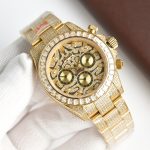
When it introduces something as bold and refined as this yellow gold Daytona, it’s impossible not to take notice. And while the replica watch may bring to mind its predecessor – the Daytona often linked to John Mayer – it would be a mistake to reduce this new model to a mere sequel. It’s a statement in its own right, and it deserves to be appreciated on its own terms.

A Brief Look at Rolex and Nicknames
In the world of luxury watches, nicknames have a peculiar way of becoming part of the lexicon. Some, like “Pepsi” for the GMT-Master II and “Coke” for its sibling, are widely accepted. Others, such as “Batgirl” or the infamous “John Mayer,” are a bit more contentious. While it’s tempting to draw comparisons, we can do better than simply tagging the latest iteration of the yellow gold Rolex Daytona as “John Mayer II.” Let’s leave that behind and allow this reference, the 126508-0008, to speak for itself.

Rolex has a habit of taking familiar designs and elevating them with subtle refinements. The 126508-0008, with its combination of yellow gold and green, is the perfect example of this. While the 116508-0013 introduced the green-dialed Daytona in yellow gold, the new model is leaner, more refined, and has a character all its own.

The Charm of the 2025 Daytona Collection
The 2025 Daytona lineup is undeniably strong, showcasing Rolex’s ability to combine timeless design with modern innovation. The yellow gold Daytona with the green dial, priced at €48,800, is a prime example of this. Building upon the foundation set by its predecessor, the 116508-0013, the new 126508-0008 is slimmer and features an updated dial. The most noticeable changes are the dial’s new shade of green and the gold sub-dials, which replace the green sub-dials found on the older model.  
These updates, though subtle, make a significant difference. The new Daytona’s green dial is a more muted, refined shade. The sunburst finish that once created a striking, almost glaring effect has been softened. The use of gold for the sub-dials and applied markers further complements the watch’s yellow gold case and bracelet, bringing the entire design into perfect harmony.

The Significance of the Sub-Dials
The sub-dials of the replica Rolex Daytona have always played a key role in defining its aesthetic, and the 126508-0008 is no exception. The decision to replace the green sub-dials of the earlier model with gold sub-dials is a brilliant move. It’s not just about aesthetics; it’s about creating balance. The gold sub-dials mirror the color of the case, bezel, and bracelet, unifying the design in a way that feels both organic and sophisticated.

This change in color and design direction might seem minor, but it adds an element of warmth to the watch, making it feel more luxurious without overshadowing the green dial itself. The combination of these two colors – green and gold – creates an almost effortless harmony, and it’s hard not to appreciate how well these elements work together.  

A Nod to Customization
When I first encountered the new green-and-gold Daytona, a thought crossed my mind. It reminded me of the Artisans de Genève Honey Green Rolex Daytona modification, which featured a deep green Bakelite bezel, gold sub-dials, and a brushed yellow gold case and bracelet. While Rolex doesn’t go as far as using a brushed finish for the case and bracelet, the overall color scheme of the 126508-0008 shares similarities with this custom creation. The gold sub-dials and green dial, paired with a matching yellow gold bracelet, create an effect that’s both luxurious and undeniably eye-catching.

It’s a subtle nod to the world of customization, but it’s clear that Rolex’s execution is all about refinement and elegance. It’s a Daytona that can stand proudly on its own, without the need for extravagant modifications.

The yellow gold Daytona with the green dial has quickly become a favorite among collectors, and for good reason. It embodies the essence of Rolex: refinement, elegance, and an unyielding commitment to quality. While I personally find myself drawn to the yellow gold Daytona with the turquoise dial (reference 126518LN), there’s no denying that the 126508-0008 is a true standout in the 2025 Daytona collection.

What do you think of the new yellow gold Daytona with a green dial? Does it surpass its predecessor, or is it simply a continuation of an already successful formula? Let me know your thoughts in the comments.
{ Comments are closed }

What Does It Mean If You Wear a Watch on Your Right Hand?

For many, the decision to wear a watch on the right hand comes down to practicality. The majority of people are right-handed, which means they use their right hand more frequently for tasks like writing, eating, or working. Wearing a watch on the non-dominant hand can prevent it from getting in the way during daily activities. It also reduces the risk of scratching or damaging the watch face, especially during manual tasks. For left-handed individuals, however, wearing a watch on the right hand is often the norm, as it allows for easier use of the crown and buttons.

In some cultures, wearing a watch on the right hand carries specific meanings. For example, in certain Eastern European and Asian traditions, wearing a watch on the right wrist is seen as a sign of independence or nonconformity. It can also symbolize a break from traditional norms, as the left wrist has long been considered the “standard” for watch-wearing. In other cases, it may simply reflect personal or familial customs passed down through generations.

Fashion is a powerful tool for self-expression, and the way you wear your watch can say a lot about your personality. Choosing to wear a watch on the right hand can be a deliberate way to stand out or make a statement. It signals confidence and a willingness to challenge conventions. For some, it’s a subtle way to express creativity or individuality, especially if paired with a unique watch that reflects their personal style.

Another reason people might wear a watch on their right hand is related to health and ergonomics. Some individuals find that wearing a watch on their left wrist causes discomfort or restricts blood flow, especially if the band is too tight. Switching to the right wrist can alleviate these issues and make wearing a watch more comfortable. Additionally, those with conditions like carpal tunnel syndrome or arthritis may find it easier to wear their watch on the less-affected hand.

Historically, replica watches were designed with right-handed individuals in mind, with the crown positioned on the right side of the watch face for easy adjustment. However, modern watch designs have become more inclusive, catering to both left- and right-handed wearers. By wearing a watch on the right hand, you’re not only embracing functionality but also challenging outdated stereotypes about how a watch “should” be worn.

Ultimately, the hand you choose to wear your watch on is a personal decision. Whether it’s for comfort, cultural reasons, or simply to make a statement, wearing a watch on your right hand is a meaningful choice that reflects your unique lifestyle and preferences.

{ Comments are closed }

What Do You All Think About People Wearing a Fake Rolex?

Not everyone can afford the steep price tag that comes with owning one, leading many to turn to replicas. So, is wearing a fake Rolex acceptable, or does it cross an ethical or social line?

For some, wearing a fake Rolex is an affordable way to enjoy the aesthetic appeal of an iconic design. A well-made replica can look almost identical to the original, offering the wearer a sense of confidence and style without the financial burden. People in this camp argue that it’s a harmless fashion choice – a way to elevate their appearance without taking out a mortgage. After all, the watch is just an accessory to most, not a declaration of authenticity.

However, critics point out the ethical issues surrounding fake watches. Counterfeit goods undermine the craftsmanship and artistry that make luxury brands so desirable. Rolex, for example, invests heavily in innovation, precision engineering, and quality control. Supporting replicas, some argue, contributes to intellectual property theft and detracts from the value of genuine products. For these individuals, wearing a fake Rolex can come across as inauthentic or even disrespectful to the brand and its loyal customers.

Wearing a fake Rolex can send mixed signals, especially to those who recognize the difference. Some might view it as a harmless indulgence, while others see it as a shortcut that lacks integrity. Interestingly, the stigma varies by culture and context. In some circles, replicas are seen as an aspirational stepping stone; in others, they’re a symbol of pretense. Ultimately, how someone is judged often depends on their attitude – are they transparent about it or trying to pass it off as real?

Do you see it as a practical fashion choice, a harmless way to indulge, or something that clashes with your principles? There’s no universally right or wrong answer. The conversation reveals more about societal attitudes toward luxury, status, and authenticity than it does about the individual wearing the watch.

{ Comments are closed }

The Importance of Keeping Vintage Rolexes Original

The definition of “vintage” has evolved significantly over the past decade. What once referred to watches 30 years or older now often begins at the 20-year mark, with many modern Rolex models – such as the Rolex Kermit with its iconic “Flat 4” bezel – falling into the “collectible” category. These so-called “neo-vintage” pieces, which represent a shift in collectors’ interests, are increasingly sought after for their unique characteristics and limited availability.

A prime example of such a collectible is the “Flat 4” bezel on the 16610LV Submariner, a feature only found on the earliest examples of this model. Later, Rolex updated the design to the “Sharp 4” bezel with a more refined numeral. This subtle change has sparked significant interest among collectors, and variations like these have carved out a niche for modern classic Rolexes. For those interested in this specific transition, we have a detailed guide on the differences between the Flat 4 and Sharp 4 bezels.

However, while these models are highly collectible, improper servicing or modifications can drastically reduce their value. Unfortunately, vintage Rolexes, and collectible watches in general, have long been at risk of devaluation due to ill-advised updates or insensitive repairs. Rolex’s own service center, despite its reputation for excellence, has historically contributed to this problem. In its efforts to restore watches to “like-new” condition, Rolex has often replaced original parts – such as dials, hands, and bezels – with non-original “service” components. This practice, while intended to maintain the watch’s functionality, has inadvertently stripped away much of its intrinsic value.

A clear example of this can be found in replica Rolex’s recent coffee table book on the Submariner, where many of the watches featured are shown with service dials. While these dials may look pristine, true collectors typically avoid watches with such replacements, as they lack the originality that makes these watches valuable. It is important to note that Rolex’s policy does not include returning the original parts when a watch is serviced and components are replaced, further complicating efforts to maintain a watch’s authenticity.

Paul Altieri, founder and CEO of Replica Watches and one of the world’s foremost Rolex collectors, offers crucial advice for anyone owning a vintage Rolex: “For any vintage or collectible Rolex, I would highly recommend keeping it all original – this includes the dial, hands, and bezel. Additionally, avoid polishing the case.” Altieri, known for his pristine collection of all-original Rolex pieces, emphasizes the importance of retaining every detail in its original state.

When it comes to the bracelet, Altieri suggests that polishing or restoring it is less critical than preserving the watch’s core components. However, the bracelet should ideally not be replaced. It is not uncommon to see vintage Rolexes where key elements – like the dial, hands, or bezel – have been swapped out, or where the case has been heavily polished. These changes, though often made with good intentions, can diminish the watch’s value and historical significance.

Purchasing a collectible vintage Rolex today is a serious investment. Modifications, upgrades, or repairs that alter the original specifications can render a watch effectively “damaged” in the eyes of many collectors. Preserving a Rolex in its original condition is essential, not only to maintain its value but also to respect its place in the history of horology.

{ Comments are closed }

Clone Rolex Explorer 36 vs. Explorer 40 of All-Around Excellence

The Rolex Explorer has long been celebrated as a quintessential sports watch, initially released in a 36mm format and briefly offered in a 39mm size. Recently, replica Rolex has reintroduced the Explorer in a 40mm version, which prompts a comparison with the classic 36mm model.

The Explorer stands out for its versatility, functioning seamlessly as both a daily wear and a refined accessory. Its neutral design allows it to be worn with formal attire or casual outfits without drawing undue attention. For many enthusiasts, the Explorer represents the pinnacle of Rolex’s all-around capabilities.

Historical Context of the Rolex Explorer
Introduced in 1953, the Rolex Explorer Ref. 6350 was the first model to bear the “Explorer” name. It featured the iconic 3-6-9 dial layout, which has become a hallmark of the line. Over the decades, the Explorer has undergone minor design changes while maintaining its core identity.

The Explorer Ref. 1016, produced from 1960 to 1989, introduced the “Superlative Chronometer Officially Certified” designation, solidifying its status as a reliable watch. Subsequent models, such as the Ref. 14270 in 1989 and the Ref. 114270 in 2001, continued to evolve with updated movements and designs, culminating in the return of the 36mm size with the 124270 model in 2021.

The New Explorer 40
In 2025, Rolex introduced the Explorer 40 (Ref. 224270), expanding the size options for enthusiasts. This model retains the hallmark features of the Explorer while appealing to those who prefer a larger wristwatch. The glossy black dial and applied 3-6-9 numerals are consistent with the Explorer aesthetic, while the new 40mm size offers a modern touch.

The 40mm size provides a more pronounced distinction between it and the 36mm version, allowing for broader appeal across varying wrist sizes. The replica Rolex Explorer 40 features 21mm lug spacing, enhancing its overall proportions while maintaining the classic Rolex design language.

Rolex’s addition of the clone Rolex Explorer 40 smartly caters to a diverse audience, providing an option for those who find the 36mm model too small. While purists may argue that the original size should remain at 36mm, personal fit and comfort ultimately dictate the best choice for each wearer.

Retail pricing reflects these adjustments, with the Explorer 36 priced at €7,250 and the Explorer 40 at €7,650. Although some may find the €400 price difference between sizes curious, it underscores Rolex’s commitment to craftsmanship and material quality.

{ Comments are closed }

Fake Rolex Pearlmaster 39 of Timekeeping

The Rolex Pearlmaster, often referred to as “the pearl of the Oyster collection,” epitomizes the pinnacle of luxury watchmaking. Crafted exclusively in precious metals, it showcases gem-set cases, bezels, dials, and bracelets, creating a stunning display of brilliance.  

In 2015, the Pearlmaster transitioned from neutral tones to vibrant designs, appealing to fake watch enthusiasts who favor bold colors. Available in a striking 39mm size, this watch is perfect for both men and women, combining elegance with precision.

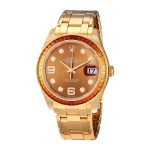
Debuting at Baselworld 2015, the Rolex Datejust Pearlmaster 39 with Sapphire Bezels is meticulously crafted in 18k yellow or white gold, utilizing alloys from Rolex’s own foundry. This model offers three stunning variations: 18k yellow gold adorned with orange and yellow sapphires, 18k yellow gold with blue and green sapphires, and 18k white gold featuring pink and blue sapphires, each complemented by a coordinating dial in red grape, olive green, or cognac.

Rolex’s commitment to excellence is evident in its in-house foundry and dedicated gemology laboratory, where the highest quality gems are meticulously selected for their replica watches. The Datejust Pearlmaster 39 features rainbow baguette-cut sapphires and vibrant dials arranged in a breathtaking gradient. Each sapphire is precisely cut in a trapezoidal shape, allowing for a seamless color transition around the watch face, showcasing exceptional artistry and craftsmanship.  

Encased in a robust Oyster case that is water-resistant up to 330 feet, the Datejust Pearlmaster 39 is designed for both aesthetics and functionality. Its sealed caseback and Twinlock double waterproofness system enhance its durability, while a scratch-resistant sapphire crystal protects the dial, which includes fake Rolex’s signature Cyclops lens for improved date visibility. The technical brilliance of the Oyster case design allows wearers to confidently enjoy aquatic activities.

Powered by the innovative Rolex caliber 3235, introduced with the Pearlmaster 39, this movement features the advanced Chronergy escapement. The COSC-certified chronometer movement incorporates Rolex’s internal standards, along with features like the Parachrom balance spring and a Microstella free sprung balance, resulting in an impressive power reserve of 70 hours.

While some may overlook gem-set watches, the Datejust Pearlmaster 39 with Sapphire Bezels stands out for its exceptional craftsmanship, mechanical reliability, and aesthetic allure. The meticulous selection, cutting techniques, and precision setting of the gemstones reflect the dedication and expertise that Rolex is renowned for.

{ Comments are closed }

Exciting Replica Rolex Watch Releases of 2025

Rolex showcased its highly anticipated 2024 lineup at Watches and Wonders, the premier event for watch enthusiasts. Unlike last year’s bold and colorful designs, replica Rolex opted for a more classic approach this year, making subtle updates to beloved models like the GMT-Master II and Sky-Dweller. However, that doesn’t mean there aren’t a few surprises in store.

Prior to the event, there was speculation about a new GMT-Master II featuring a red-and-black “Coke” bezel, inspired by a 2022 patent filing for a black-and-red Cerachrom bezel. Instead, Rolex surprised attendees with one of its most understated GMT-Master II models in recent memory, subtly echoing a release from last year’s event. Let’s explore some of the standout new Rolex watches for 2025.  

The Sleek New GMT-Master II

Rolex’s latest GMT-Master II, reference 126710GRNR, is crafted in steel with a sophisticated black-and-gray colorway, offering a fresh take on the previous two-toned model, 126713GRNR. This isn’t the first time we’ve seen a black-and-gray bezel from Rolex, but it’s the first time it’s been used in a steel GMT-Master II. It joins the “Pepsi” (red and blue), “Batman” (black and blue), and “Sprite” (black and green) as part of Rolex’s Oystersteel GMT-Master II collection. The watch is available with either a Jubilee or Oyster bracelet and is priced at $10,900, making it a sought-after piece for collectors.  

A Dazzling New Deepsea Model

Rolex introduced a striking new version of the Deepsea, their ultra-capable dive watch, now available in yellow gold. This model features a Cerachrom bezel insert and an RLX titanium caseback, marking the first time Rolex has combined gold, titanium, and ceramic. With a depth rating of 12,800 feet, the Deepsea is designed for serious diving, yet it seamlessly blends luxury with technical excellence – a hallmark of clone Rolex’s design philosophy.

Sky-Dweller Takes Center Stage

The Sky-Dweller has evolved from an under-the-radar model to a highly coveted watch, thanks to its sophisticated design and functionality. In 2024, Rolex introduced two new Sky-Dweller references: one in Everose gold and the other in yellow gold, both featuring a Jubilee bracelet made entirely of precious metal. This marks the first time such a bracelet has been paired with the Sky-Dweller, adding an elegant touch to Rolex’s most complex watch.

Additional 2025 Rolex Releases

Rolex continued to expand its collection with a variety of new offerings. Among the most luxurious are two new Daytona models featuring diamond-set bezels and mother-of-pearl dials. The “Pearl Panda” model boasts a white mother-of-pearl dial with black chronograph registers and is available exclusively with an Oysterflex strap, while the black-dial version comes with an Oyster bracelet.

Rolex also updated the Day-Date with several new variants, including a notable Everose gold model with a charcoal dial that was discreetly debuted at the Oscars earlier this year. Completing the 2025 lineup is a new 1908 dress watch, now available with a platinum case and an engine-turned guilloche dial in ice blue, adding a touch of elegance to the collection.

{ Comments are closed }